


Solution for producer responsibility of large industrial batteries – Four companies expanding Recser
A recycling system in line with producer responsibility is being established for large industrial batteries by expanding Recser’s operations. In February, four producers of large industrial batteries—Avant Power from Ylöjärvi, Cactos from Kempele, Enico from Tampere, and Merus Power from Ylöjärvi—joined Recser as shareholders.
The background for this expansion is the EU’s new Battery Regulation, which requires that producers of large industrial batteries must comprehensively and collectively manage the recycling of their products starting in August 2025. A company must be part of the collective responsibility system in order to place batteries on the market.
“Now that the ownership base is in place, we will start expanding the producer responsibility system by creating collection readiness as well as transport and recycling services for end-of-life large industrial batteries. To organize this, we have appointed Arttu Kautonen to a newly created position as Circular Economy Manager for Industrial Batteries,” says Recser’s Managing Director Liisa-Marie Stenbäck, expressing satisfaction with the solution.
Kautonen transitions into the role from the Mitsubishi Logisnext Europe Group.
“I have gained familiarity with industrial battery technologies and the producer interface while working for a global heavy machinery manufacturer. I hope this experience will help me quickly contribute to the development,” Kautonen says on his first day in the position.
The need for battery industry companies to organize is driven by the EU’s new Battery Regulation, which came into force in August 2023. The regulation mandates collective producer responsibility for the recycling of all battery categories starting in August 2025.
The newly joined companies enable the creation of a new producer responsibility system as part of Recser’s existing framework for industrial batteries over 25 kg that are not lead-based. Corresponding systems already exist in Finland for lead batteries and other battery categories.
Following the regulation’s implementation, Recser and other producer organisations in the battery industry began jointly investigating how producers of large industrial batteries wanted to organize themselves.
“In the process initiated by the seminar we held in spring 2024, producers decided to expand Recser instead of establishing a new producer organisation,” explains Stenbäck.
The new shareholder company Cactos sees collaboration as a reasonable way to handle producer responsibility.
“We handle many things ourselves, but this is something that makes sense to do together with other producers. Recser is a producer-founded and producer-owned organisation that will take care of this producer responsibility,” says Cactos’ COO Veli-Erkki Ruotsalainen.
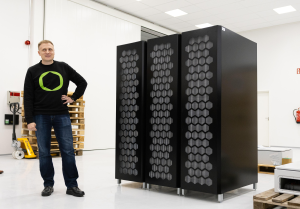
Veli-Erkki Ruotsalainen, Chief Operating Officer of Cactos. Photo: Cactos Oy
Industrial batteries include:
- Traction batteries used in railway, water, and air transport vehicles
- Traction batteries used in mobile work machines
- Batteries used in communication networks, agricultural operations, or for energy production and distribution
EU Regulation: Recycling is a Requirement for Market Placement
Extended producer responsibility means that battery producers must comprehensively and collectively organize the recycling of their products. A company must be part of the collective responsibility system in order to place batteries on the market.
“Unlike directives, EU regulations generally do not allow for national discretion. This means that the Battery Regulation will take effect as it is in all member states. Each country must make the necessary amendments to its national legislation for implementation,” Stenbäck emphasizes.
Under producer responsibility, companies placing batteries on the market must ensure proper waste management and recycling at the end of their lifecycle while also considering recyclability in product design. The Battery Regulation requires that producer responsibility is addressed before products can be sold in the Finnish market, and its costs must be incorporated into product pricing at the time of sale.
Due to these requirements, the most significant amendment to Finland’s national Waste Act concerns industrial batteries, whose producer responsibility is shifting from individual to collective responsibility. Moving forward, a nationwide, collectively managed collection system must be established for all industrial batteries, regardless of when they were placed on the market.
The Battery Regulation aims to promote the circular economy, strengthen the internal market, and reduce the environmental and social impact of batteries.
However, according to Risto Laakso, representing the new shareholder company Merus Power, this is not just about complying with legal requirements—customers are highly interested in sustainability. Proper end-of-life recycling of products is essential.
“For large investors, EU taxonomy and the green transition are key factors. Taxonomy determines the types of investments eligible for support or favorable financing.”

Risto Laakso is the Environmental, Health, Safety, and Sustainability Manager at Merus Power. Photo: Merus Power.
Joining a Producer Organisation to Fulfill Producer Responsibility
In Finland, battery industry companies must fulfill their producer responsibility by joining a producer organisation. These organisations are non-profit entities founded by producers themselves, organizing the collection and recycling of end-of-life batteries on behalf of their members.
- Suomen Autokierrätys Oy manages traction batteries from electric vehicles.
- Akkukierrätys Pb Oy is responsible for lead-based vehicle and industrial batteries.
- Recser Oy and ERP Finland ry have so far been responsible for batteries under 25 kg.
With Recser’s expansion, producer companies from all battery categories—including large industrial batteries—now have a suitable producer organisation to join.
The new shareholder company Enico sees joining a producer organisation as the most efficient way to manage a company’s responsibilities.
“The Battery Regulation mandates recycling responsibility, but it is also in the best interest of a responsible company. As a small, growing business, we didn’t see it as practical to handle this on our own,” says Enico’s COO Anna Prusi.
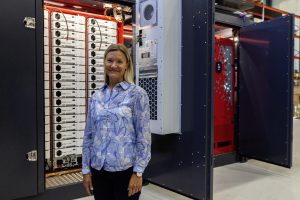
Anna Prusi, Chief Operating Officer of Enico. Photo: Enico
If your business involves batteries, it is essential to check the legal changes brought by the Battery Regulation. For example, the expanded definition of a “producer” has brought entirely new companies under producer responsibility.
You can transfer your producer responsibility to Recser by registering as a producer here: Registering as a producer – Paristokierrätys. We keep registered producers informed about upcoming changes and are happy to assist with any producer responsibility-related questions: info(a)recser.fi.
Cover image: Cactos Oy
Company introductions
Merus Power
Merus Power designs and manufactures energy storage systems and devices that improve power quality. Energy efficiency, a clean future, renewable energy, and power quality have been at the core of the company’s operations since its inception.
“From the very beginning, it has been clear to us that the recycling of devices must be taken care of,” emphasizes Risto Laakso, Merus Power’s Environmental, Occupational Safety, and Responsibility Manager.
“Industrial batteries in large energy storage systems can weigh up to 200 tons. When a battery system reaches the end of its lifecycle and needs to be replaced and recycled, it becomes quite a large-scale project,” he explains.
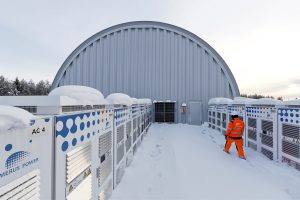
Photo: Merus Power
Merus Power was founded in 2008. The company’s revenue has steadily increased, reaching €35.6 million in the last fiscal year. The number of employees is also growing, with 117 at the end of last year. Merus Power’s headquarters are now in Ylöjärvi, and it also has offices in Helsinki, Germany, and the United Arab Emirates. The company went public four years ago.
“We are a company founded by engineers. The founders all have a shared background at Nokia Capacitors,” Laakso says about the company’s origins.
“Originally, we operated in Nokia, in the basement of a rubber boot factory. Two years ago, the company moved its production and headquarters to larger premises in Ylöjärvi,” he continues.
Merus Power operates globally, with its products sold in over 70 countries. In the early years, projects and devices were mainly delivered abroad.
“Our power quality improvement products include active filters, STATCOM, and SVC devices—speaking in engineering terms,” says Laakso.
“To put it simply, they act like a washing machine for electricity. In Finland, we generally have good power quality, but that’s not the case everywhere in the world,” he explains.
Merus Power delivered its first energy storage systems to Finland in 2018–2019. Energy storage allows for greater integration of renewable energy into the national grid. An energy storage system consists of batteries, inverters, control and protection systems, and various other components that enable grid connection.
“Energy storage systems have grown rapidly in number and their capacity has increased year by year,” Laakso states.
Beyond the company’s core values, Merus Power’s involvement in Recser’s ownership and the producer organisation is also driven by a desire to anticipate business developments through information access. Collaboration with other Finnish companies in the producer organisation is also important.
“Fairness and equity are key reasons we joined. All producers must take responsibility for battery recycling according to the polluter-pays principle. Producers are responsible for ensuring batteries are properly recycled,” says Laakso.
“Recser and the producer organisation organize recycling, enabling the reuse of materials,” he adds.
Enico
Enico provides comprehensive energy storage solutions designed for Nordic conditions. Founded in 2019 in Tampere, the company’s main markets are the Nordic and Baltic regions.
“There’s no alternative—devices must be recycled at the end of their lifecycle,” says Enico’s Chief Operating Officer, Anna Prusi, firmly.
Enico’s revenue has tripled annually over the past three years. Last year, it was around €9 million, with a target of €25 million this year. This growth is also reflected in its workforce, which tripled in 2024.
Enico is part of the Finnish family-owned group, West Invest Group. Within the same group, the sister company Ubitec is responsible for installation and maintenance services. The company sources components from Finnish or European suppliers.
“We operate with a partnership mindset, meaning we don’t rely on single suppliers but instead develop products collaboratively with our partners,” says Prusi.
“Energy storage systems participate in Fingrid’s frequency reserve market, making them part of critical infrastructure. We want to ensure that all activities—ours and those of our subcontractor network—are responsible and safe,” she continues.
With Enico’s energy storage solutions, customers can participate in Fingrid’s frequency reserve market, creating a new revenue model. There are various applications for energy storage, such as backup power, peak shaving, and maximizing the benefits of solar or wind power.
“Our customers include shopping centers, fish processing plants, sawmills, and electric vehicle charging operators.”
Enico sees producer responsibility as self-evident. The company joined Recser’s ownership to have a say in decisions affecting its operations.
“We don’t want to just sit in the passenger seat listening to decisions made by others,” Prusi says.
“Recser has been handling the recycling of smaller batteries for a long time, so they have expertise in battery recycling and network management. It makes sense to collaborate with an experienced player to develop large-scale battery recycling,” she adds.
Cactos
Cactos Oy, founded in 2021, offers automated energy storage services—providing both storage units and related software and operational solutions for businesses. The company has its own factory in Kempele, with additional offices in Helsinki and Amsterdam.
“Our company exists to enable the global energy transition,” says Cactos’ Chief Operating Officer, Veli-Erkki Ruotsalainen.
Despite being just a few years old, Cactos has installed approximately 160 energy storage units in Finland and Ukraine. Deliveries to the Netherlands and Sweden are in preparation. The company’s revenue has grown rapidly, reaching €3.2 million last fiscal year, with expectations exceeding €10 million this year.
“We sell energy storage as a service, meaning businesses can store electricity and optimize trading. In industry terms, this includes behind-the-meter operations that help reduce electricity costs or enable higher power outputs. Additionally, we operate Finland’s first five-megawatt grid-scale energy storage facility in Kuhmoinen,” Ruotsalainen explains.
Cactos’ workforce has also expanded quickly, now employing 75 people. A significant portion of the staff focuses on developing cloud-based and smart systems. The company is vertically integrated, handling its own manufacturing except for battery cells, which it purchases.
“The founders of Cactos all worked in different industries for over a decade—ranging from oil and arms manufacturing to social media marketing. What united us was the desire to create something tangible that drives the world forward,” Ruotsalainen says about the company’s founding.
Cactos also joined Recser’s ownership and the development of an industrial battery producer responsibility system based on its values.
“We are enabling the world’s shift to renewables, and it’s important to us that the end-of-life process is also handled properly in Finland,” Ruotsalainen states.
Recser’s ownership is also key to Cactos because it helps the company leverage its expertise in a new sector during expansion.
“We are one of the largest players and pioneers in many areas,” he specifies.
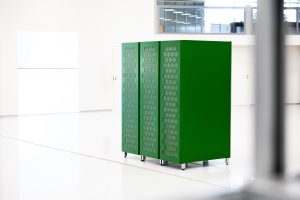
Photo: Cactos Oy
Definition changes: is your company now an industrial battery producer?
The new law provides a more precise definition of industrial batteries. These include batteries specifically designed for industrial use, as well as those repurposed for industrial applications.
Examples include traction batteries used in railway, marine, and aviation vehicles, batteries for mobile work machinery, and those used in communication networks, agriculture, or electricity production and distribution.
Additionally, all batteries over 5 kg are classified as industrial batteries unless they are specifically for electric vehicles, light mobility devices, or automotive applications. This means consumer products, such as home energy storage batteries, also fall under the industrial battery category.
The regulation also expands the definition of a battery producer to include not only importers, manufacturers, and online sellers but also distributors. Any entity that places industrial batteries on the Finnish market for the first time is considered a producer.
Online sellers must now appoint an authorized representative in each EU country where they sell batteries directly to end-users.
Responsibilities have changed: producer, this now falls under your duty
The producers are responsible for the collection and recycling of used batteries. According to the EU Battery Regulation, this extended producer responsibility becomes joint liability for industrial batteries, meaning that batteries cannot be placed on the market unless the responsibility is fulfilled. In Finland, this means joining the producer organisation established by producers.
The producer organisation ensures that users have the opportunity to return all waste batteries, classified as industrial batteries, easily, free of charge, and without the obligation to purchase a new product.
All industrial batteries simply refer to the fact that the battery must be accepted regardless of its origin, brand, condition, nature, or chemical composition. The challenge is further increased as collection points might also receive industrial batteries that were placed on the market before the law change.
To receive these, a nationwide collection network, collection infrastructure meeting safety requirements, and transport to licensed treatment facilities must be in place.
In addition to tightening recycling efficiency requirements, the recycling processes must capture an increasing amount of key battery raw materials, such as cobalt, lithium, copper, and nickel. After transition periods, new batteries must contain at least the minimum required amount of recycled raw materials.
Sorry, the comment form is closed at this time.